
Anytime Spring Rolls inspired by Pamela Salzman
May 07, 2026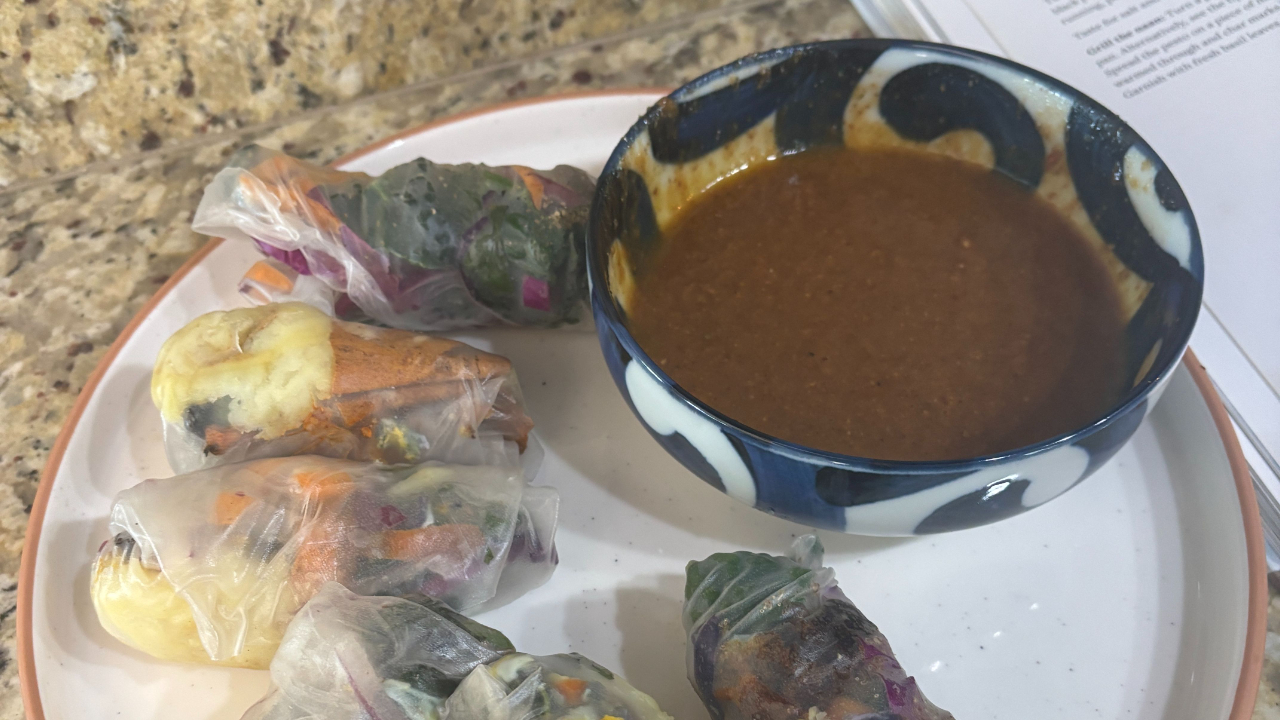
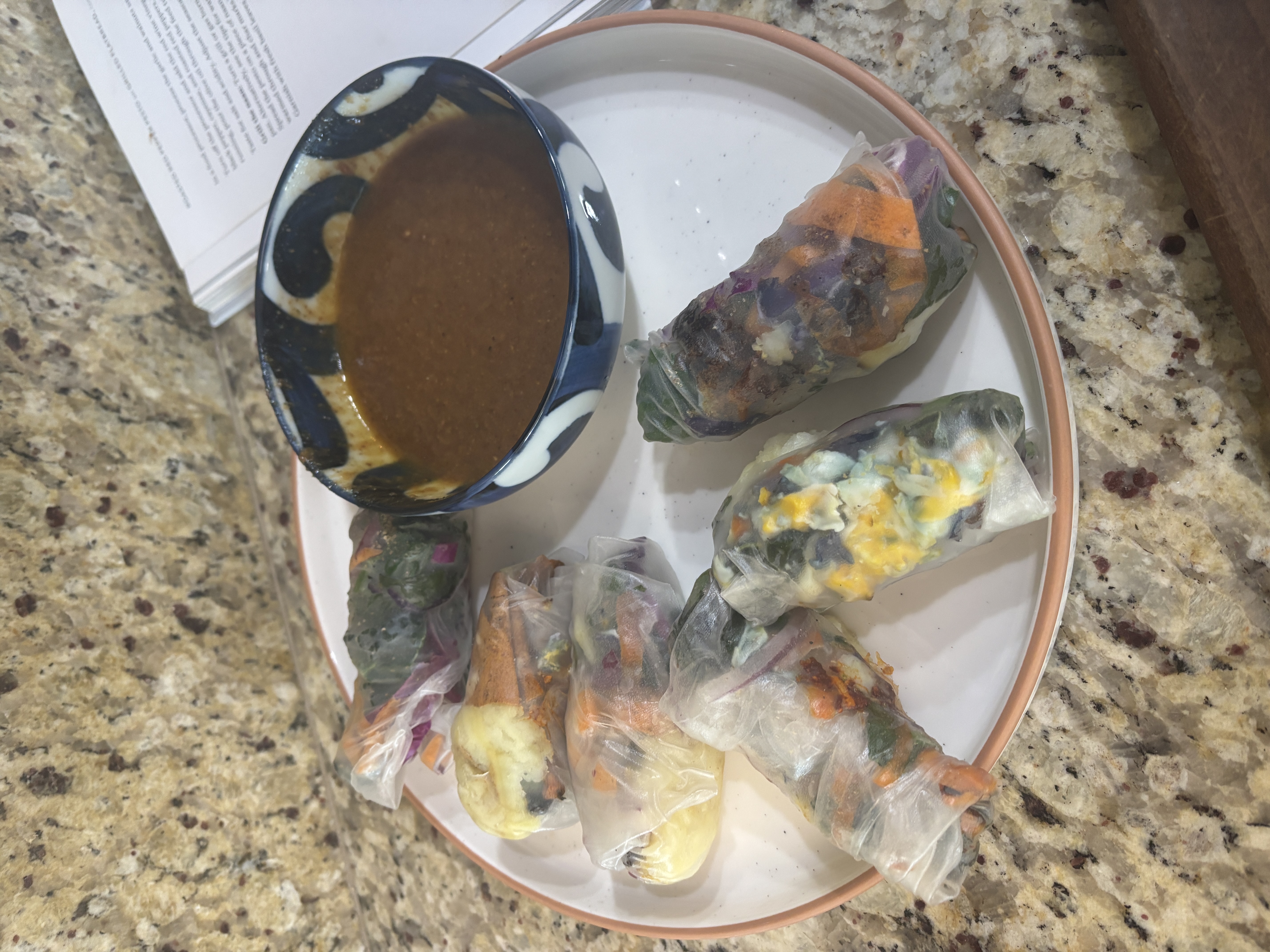
This quick, fresh gluten-free recipe is perfect for a 20‑minute lunch, chop whatever is fresh in the fridge, and use your leftovers. These rolls are different and delicious every time! Can't lose:)
Ingredients:
- Rice paper rounds
- Handful fresh mint leaves
- Handful fresh basil leaves
- Handful fresh cilantro leaves
- 4 medium Brussels sprouts, thinly sliced or shredded
- 1/4 small red cabbage, thinly sliced or shredded
- 2 medium carrots, shredded or julienned
- 1 large avocado, sliced
- 1/4 cup sliced scallions
Optional add‑ins:
- Cooked shrimp, scrambled eggs, chicken, tempeh, tofu, cooked rice noodles, roasted sweet potato, leafy greens (mixed lettuces, spinach, arugula)
Sauce:
- 2 tbsp almond butter
- 1 tbsp unrefined cold‑pressed extra‑virgin olive oil (preferably Spanish)
- 1 tbsp unseasoned rice vinegar
- 1 tsp raw honey or pure maple syrup
- 1 tsp water
- 1 tsp coconut aminos
- Pinch sea salt
- Pinch cayenne pepper or sriracha
Instructions:
1. Make the sauce: Whisk all sauce ingredients in a bowl or jar; set aside.
2. Soften rice paper: Fill a shallow bowl with warm water. Soak one rice paper round 30–60 seconds until pliable; transfer to a plate or cutting board.
3. Assemble: Layer herbs and vegetables near the lower third of the wrapper (mint, basil, cilantro, shredded veggies, avocado, scallions, and protein if using). Fold sides in, then roll tightly from the bottom to enclose filling. Place finished rolls on a plate and cover with a damp towel.
4. Serve immediately with sauce.
Why this recipe supports health → gene‑relevant benefits
- Leafy herbs & greens (mint, basil, cilantro, mixed greens): rich in folate and polyphenols, supports MTHFR (methylation) and provides antioxidant substrates useful across detox and inflammatory pathways.
- Brassicas (Brussels sprouts, red cabbage): glucosinolates and sulforaphane precursors — support phase II detoxification (GST family, including GSTP1), modulate EPHX1 activity, and help regulate CYP enzyme activity.
- Allium & scallions: sulfur compounds that support glutathione production and phase I/II enzymes (CYP and GST), and help immune signaling relevant to HLA‑associated responses.
- Colorful carotenoids (carrots) & vitamin A precursors: antioxidant support that helps reduce systemic inflammation (CRP) and supports SOD2 activity for mitochondrial oxidative stress resistance.
- Avocado & olive oil: monounsaturated fats and polyphenols — improve lipid metabolism and antioxidant status (PON1 antioxidant-lipoprotein protection; APOE‑related lipid handling), support membrane health and hormone synthesis (relevant to COMT and hormone‑related pathways).
- Almond butter: vitamin E and monounsaturated fats — antioxidant protection and support for PON1 and oxidative stress markers.
- Fermentable fiber and soluble fiber from vegetables: feed beneficial microbes (Bifidobacterium, etc.), support gut barrier and nutrient absorption influenced by FUT2 (microbial colonization) and HLA‑mediated immune tolerance.
- Low‑glycemic, balanced protein options (shrimp, chicken, tempeh, tofu): help stabilize blood glucose and insulin signaling — relevant for FTO and other metabolic regulation genes.
- Anti‑inflammatory spices (cayenne, sriracha, herbs): capsaicin and polyphenols lower pro‑inflammatory signaling (TNF‑α, IL6) and can reduce CRP.
- Nutrient density for detox & energy (grass‑fed or high‑quality protein choices): provide methionine, glycine, and other amino acids that support glutathione synthesis and phase II conjugation (GSTs) and supply cofactors for ATP production and mitochondrial function (supports genes involved in energy metabolism).
- Polyphenols & antioxidants across ingredients: reduce oxidative stress and support enzymes like SOD2, PON1, and downstream effects on inflammatory markers (TNF‑α, CRP).
- Modulation of CYP enzymes: cruciferous vegetables and alliums can induce or modulate CYP activity helping to balance phase I reactions (CYP family) with phase II conjugation (GSTs, EPHX1) to reduce intermediate toxin buildup.
TL:DR: Why this recipe is great for your genetics!
- MTHFR: natural folate from greens supports methylation.
- FUT2: prebiotic fibers and diverse plants support beneficial microbial colonization patterns.
- FTO: protein‑rich, lower‑refined‑carb composition supports blood sugar and weight regulation.
- CYP family (phase I): cruciferous and allium compounds modulate CYP activity to improve toxin handling.
- GSTP1, GST family: cruciferous vegetables and sulfur‑rich foods support phase II conjugation.
- EPHX1: bioactive phytochemicals (from brassicas, herbs) help regulate epoxide hydrolase activity.
- HLA: anti‑inflammatory, minimally processed whole foods support immune tolerance.
- TNF‑α / CRP: polyphenols, MUFAs, and fiber reduce pro‑inflammatory signaling and systemic CRP.
- SOD2: antioxidant‑rich vegetables and carotenoids support mitochondrial antioxidant defenses.
- PON1: healthy fats and vitamin E from avocado/almonds support PON1 activity and lipid antioxidant capacity.
- ATP & mitochondrial genes: balanced protein, healthy fats, and antioxidants support energy production and mitochondrial resilience.
Clinical note:
As a Certified Functional Nutritional Counselor, I recommend whole‑food meals to support microbiome diversity, reduce exposure to toxins/antibiotics/ultra‑processed foods, and meet individualized nutrient needs. If added fiber causes bloating, consider gut microbiome testing and working with a practitioner for targeted support. Book a call to learn more.